Gender Characteristics
Traditional references to feminine and masculine absolutes, in the modern sense, are reflected as feminine and masculine dimensions. The classical view was built on binary oppositions, such as the inevitability of masculinity (man) and femininity (female) in relation to biological features (reproductive organs, muscle composition, body shape). Today, these understandings have evolved into more complex concepts due to the nature of the mind.
Gender traits were originally correlated with specific skills, roles, and behaviours. For example, stereotypes of masculine traits include working in construction, smoking cigarettes, being the “man of the house”, and being strong. In contrast, traits linked to femininity include housework, teaching, being sensitive, and being weak. It was not until the late 20th century that an important perspective emerged: variations of both masculinity and femininity are found in both men and women.
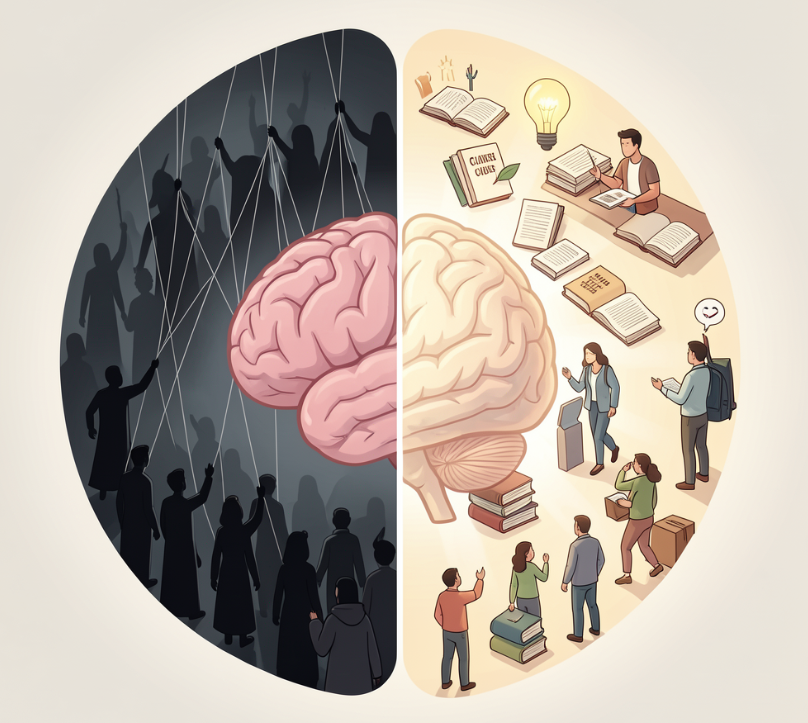
Androgyny is understood as the conceptualisation that both sexes can possess characteristics of both genders, a multi-dimensional notion of masculinity and femininity. It introduces a new layer of reality in which gendered behaviours and thoughts are not static but flexible, they are not fixed in but flexible and situational. It is important to note that biological phenotypes (genes and environment) consist of physiological aspects (genitals, hormones, brain activity…) and psychological factors (preferences, behaviours, personality…). The deeply rooted conceptualisation of gender fluctuates between two extreme poles, where women are perceived as the opposite of men. There are two components according to the Bem Sex Role Inventory (BSRI) (Bem, 1981).
Masculinity
- Personality characteristics: assertiveness and individualism
- Cognitive characteristics: analytical thinking, problem solving, leadership, and decision making
Femininity
- Personality characteristics: submissiveness and friendliness
- Cognitive characteristics: creativeness, intuition, emotional intelligence, nurturing, and support
Language and Connotation
“There are no pre-existing truths for the things of the world to represent in language” (Koshy, 2024).
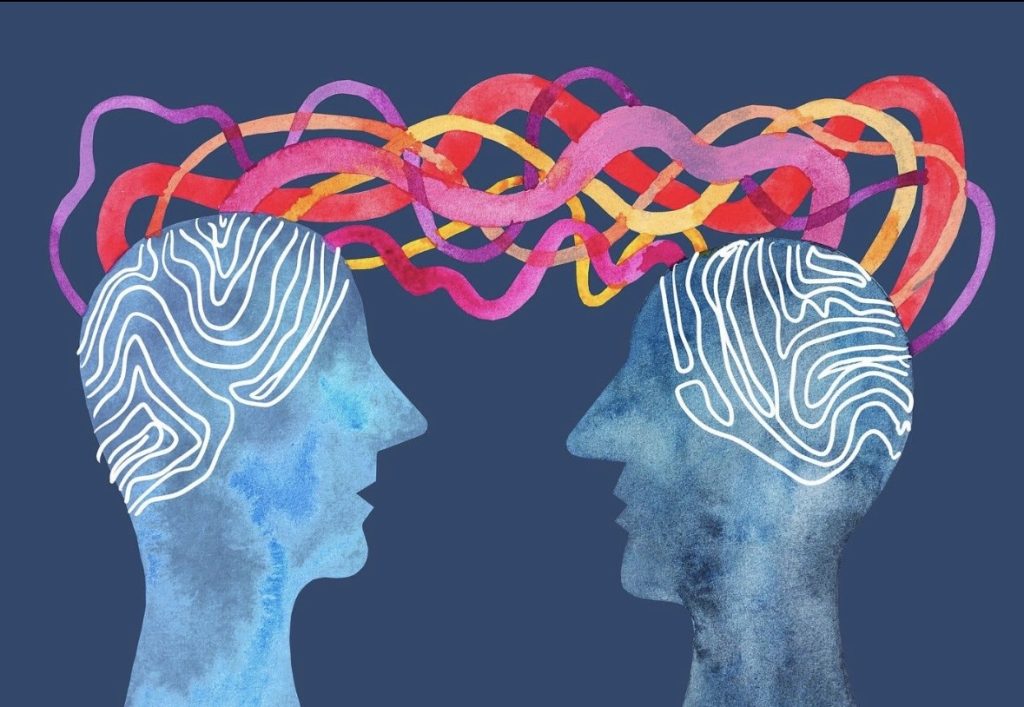
Language practices are shaped by various identities and social contexts, such as age, ethnicity, socioeconomic status, and geographical location. The sociolinguistics of gender refers to language use, communication patterns, and behaviours overlapping with social constructs. This means that specific connotations of words or expressions, vocabulary choices, and sentence structure are embedded within gender frameworks. Therefore, understanding the roots of language usage discloses the relationship between feminine and masculine ‘fixed’ roles.
People from different backgrounds speak differently, often in relation to social class (economic dimension). This explains why people from lower socioeconomic classes may use different vocabulary and may appear more vulgar compared to those from higher classes. Cultural norms (values and beliefs) also influence sociolinguistics; for example, a man may treat a female friend gently while behaving more aggressively towards a male friend.
An interesting outlook on the human psyche and biology is a gendered bias in perception. Philosophers often claim neutrality, asserting that all humans are conscious beings regardless of differences. However, Cavarero highlights important differentiations: women are often objectified, perceived as weak, and seen as lacking logic.
“Though philosophers do not accept the difference between men and women at the level of consciousness, they differentiate them sexually” (Koshy, 2024).
Men are often described as rational, strong, and moral, while women are characterised as emotional, fragile, and immoral. Thus, traditional reality is framed as a masculine enterprise. Studies reveal that feminine conversational styles are associated with interest (e.g., “isn’t it?”), politeness (“please,”“thank you”), subordination (“kind of,” “maybe”), and agreeableness (Coates, 2015). Masculine communication, by contrast, tends to emphasize information exchange and status assertion. However, as mentioned, it is a malleable androgyny.
“Gendered language use is a product of interaction rather than a fixed trait” (Eckert & McConnell-Ginet, 2013).
In situations of conflict between opposite genders, reducing tension may involve increasing awareness and perceptibility of the other. For example, if one person displays dominant and aggressive (traditional masculine traits), the most effective response may involve balancing the field of femininity and masculinity with empathy, emotional awareness, and compassion (traditional feminine traits). This can stabilise interaction and prevent escalation.
The Social and Cultural Sphere
Transdisciplinary approaches (combining different branches of knowledge) reveal power relations between the “strong” and the “weak.” Power dynamics can also manifest as cultural violence, not only gender violence, through governmental regulations, economic capitalism, and institutional systems.
Holistic approaches reveal core principles for understanding gender ‘roles’. Instead of proceeding with an ideology of black and white, right or wrong, advanced research suggests that the driving force of a balanced relationship lies in a sense of push and pull.
“Symbolic understandings and approaches are often more easily expressed in art or literature, because the inexpressible can be communicated in ways that are not possible in rational or logical approaches” (Arahmaiani & Campbell, 2019).
Nietzsche emphasized and brought to life the nature of the feminine truth, suggesting that there is no absolute truth. Appearances are not fixed; rather, they are transformative. He refers to the nature of femininity as becoming.
Cultural beliefs, values, and norms differ from one another, and regional classification plays a significant role in shaping roles, tendencies, and behaviours. In many cultures, inheritance is passed through the female line, where women oversee financial activities and decision-making. Many tribal communities treat the woman as the centre of the household; she symbolises wisdom, vulnerability, creation, and intelligence.
The relationship between language and gender is deeply immersed in both the former structure of language and its usage. It is confirmed that both men and women abide by masculine features due to the historically masculine nature of language. Today, gender has entered a different dimension, as long-standing repression has been boiling beneath our tongues, where men were not allowed to be weak, and women were positioned as inferior. Lacan speaks of a child’s self-identity formation as occurring through entry into language within the unconscious. Language organizes the chaotic flow of unconscious thoughts and transforms them into shared symbols.
References
Amina, Z. I. (2024). GENDERED LANGUAGE: ANALYZING SOCIOLINGUISTIC DIFFERENCES IN COMMUNICATION. Zenodo (CERN European Organization for Nuclear Research). https://doi.org/10.5281/zenodo.13880229
Arahmaiani, & Campbell, S. (2019). Balancing Feminine and Masculine Energy. Southeast of Now: Directions in Contemporary and Modern Art in Asia 3(1), 201-213. https://dx.doi.org/10.1353/sen.2019.0015.
Bem, S. L. (1981). Gender schema theory: A cognitive account of sex typing. Psychological Review, 88(4), 354–364. https://doi.org/10.1037/0033-295X.88.4.365
Cavarero, A. (1995). In spite of Plato: A feminist rewriting of ancient philosophy (S. Anderlini, Trans.). Routledge.
Coates, J. (2016). Women, Men, and Language: A Sociolinguistic Account of gender differences in Language. https://doi.org/10.4324/9781315645612
Eckert, P., & McConnell-Ginet, S. (2013). Language and Gender. https://doi.org/10.1017/cbo9781139245883
Holmes, J. (2013). An introduction to sociolinguistics. https://doi.org/10.4324/9781315833057
Koshy, A. (2024). Excavating sexual difference in language and thinking. Humanities and Social Sciences Communications, 11(1). https://doi.org/10.1057/s41599-024-03216-w
Lacan, J. (2001). Écrits: A Selection. https://doi.org/10.4324/9780203995839
Lakoff, R. (1975). Language and women’s place. Harper & Row.
Leszczynski, J. P. (2009). A state conceptualization: Are individuals’ masculine and feminine personality traits situationally influenced? Personality and Individual Differences, 47(3), 157–162. https://doi.org/10.1016/j.paid.2009.02.014
Ngun, T. C., Ghahramani, N., Sánchez, F. J., Bocklandt, S., & Vilain, E. (2010). The genetics of sex differences in brain and behavior. Frontiers in Neuroendocrinology, 32(2), 227–246. https://doi.org/10.1016/j.yfrne.2010.10.001
Nietzsche, F. (1968). The will to power (W. Kaufmann, Ed.). Vintage Books.
Saussure, F. de. (1959). Course in general linguistics (C. Bally & A. Sechehaye, Eds.). Philosophical Library.
Spence, J. T., & Helmreich, R. L. (1981). Androgyny versus gender schema: A comment on
Yang, Y., & Merrill, E. C. (2016). Cognitive and personality characteristics of masculinity and femininity predict wayfinding competence and strategies of men and women. Sex Roles, 76(11–12), 747–758. https://doi.org/10.1007/s11199-016-0626-x
Edited and copyedited under the supervision of Fatima Nazar