“The differentiation between science and pseudoscience is not clear-cut but rather a continuum.”
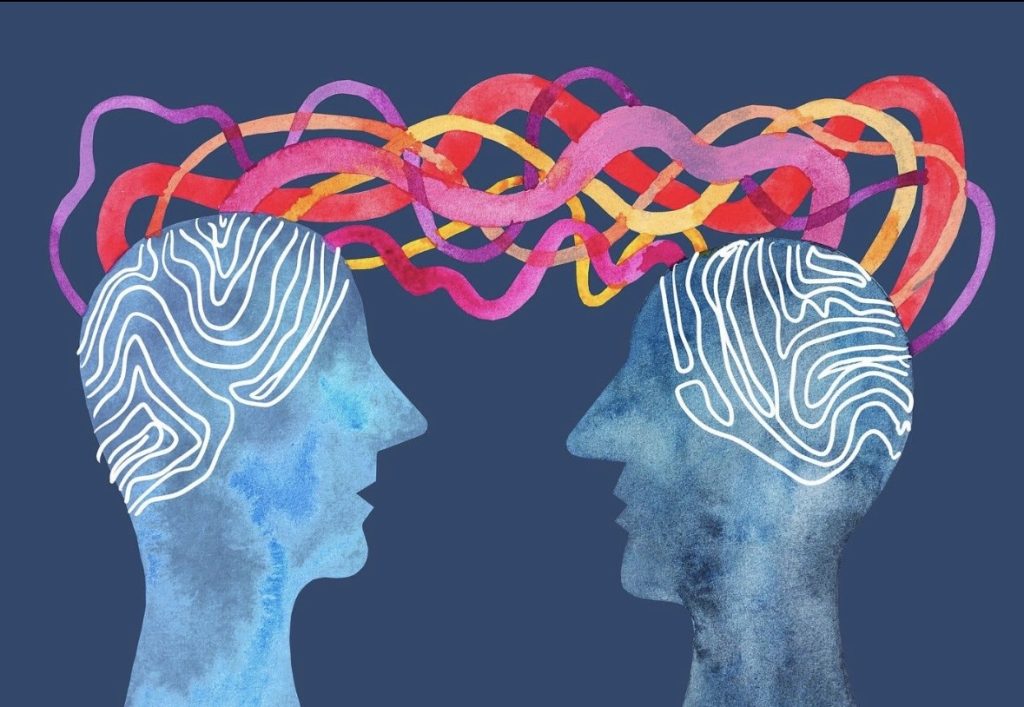
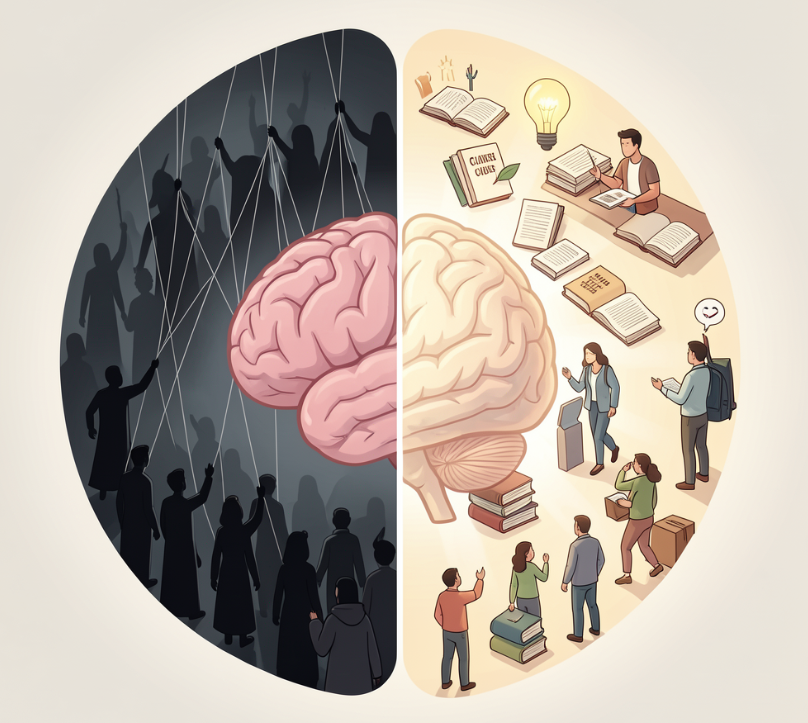
Pseudoscience is a term referring to a set of beliefs that are widely followed and presented as a type of science, even though they are not. Some beliefs and practices may seem and sound scientific, yet they lack the proper methods required to reach certainty (or uncertainty). Evidence within the dimensions of pseudoscience may exist, but it is often constrained by a limited capacity of measured knowledge, resulting in such evidence being labelled as random compatibility rather than empirical proof recognized by science. On the other hand, we cannot ignore the fact that science is socially constructed and that the acceptance of novel ideas, theories, and facts forms new paradigms. Some philosophers agreed on criteria that help differentiate scientific knowledge and non-scientific knowledge, a concept known as demarcation.
Falsification: Science is the ability to prove something right or wrong, regardless of whether it is ultimately true or false. (Popper, 1953/1998)
Existence or absence of a paradigm: A paradigm is the foundation of rules, protocols, and the capacity for change within any scientific field, based on processes, results, and measures. (Gieryn, 1995)
Knowledge-growing: The concept of expansion, renewal, and development of knowledge presents science not as a linear visualisation but as a continuously evolving process. (Hacking, 1981)
Well- and poorly- confirmed knowledge: This questions whether science can fully grasp unobservable entities, acknowledging the possibility that some correct theories may be wrong and some wrong theories may eventually be proven right. (Laudan, 1981)
The Zodiac and Its Signs
The word zodiac has two original meanings. The first derives from the Greek expression meaning “circle of animals,” which was used by pagan astronomers to refer to a band of stars across the sky. Ancient astronomers noticed that the sun, moon, and planets move through certain constellations in the sky, many of which were represented as animals, leading to the idea of the zodiac as a “circle of animals.” Another interpretation comes from the Greek word zōidiakos, derived from zōion, meaning “animal” or “living being,” with the root zo- relating to life. By understanding the origin of the zodiac, its connection to ancient astronomy, animals, and life, we can explain why zodiac signs continue to be discussed, followed, and believed in today, despite not being considered part of modern science.
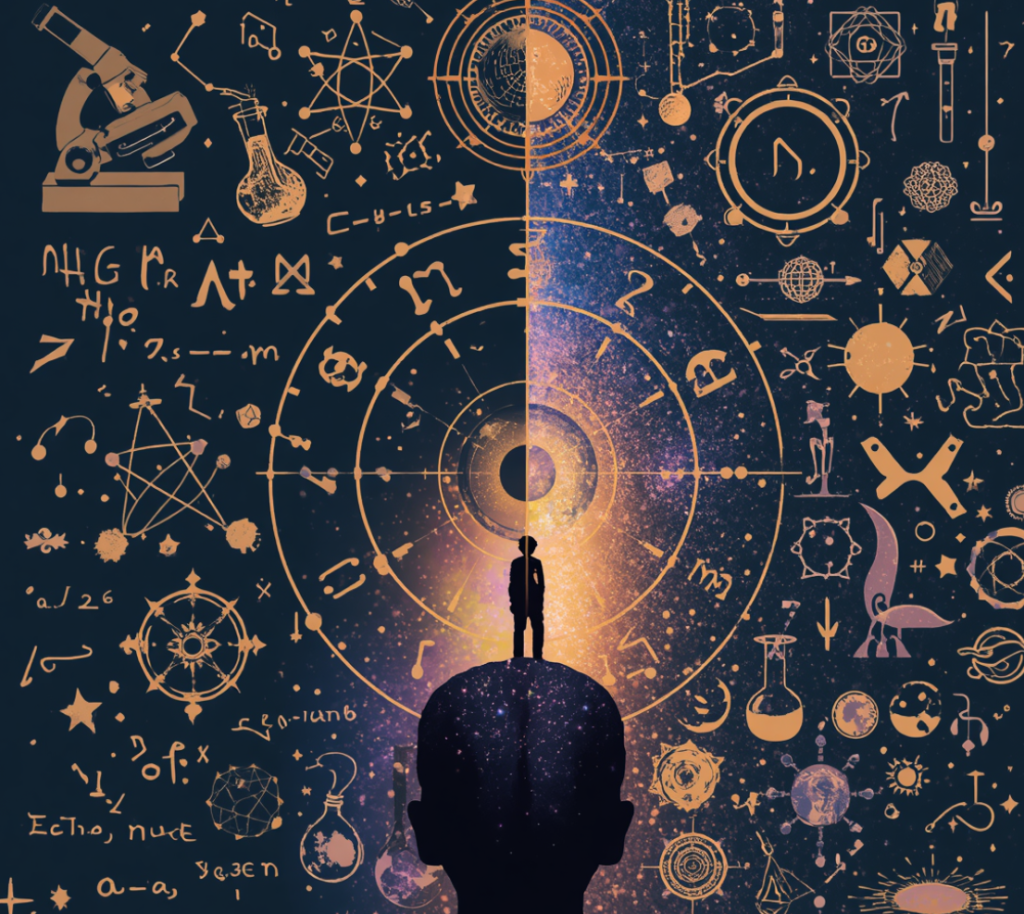
Astronomy and astrology originated in ancient times. Spiritually, those born on Earth during a specific period, when the sun occupied a particular position and moved at a particular speed, are believed to be influenced by the alignment of stars, planets, the moon, and the sun. Nearly every religion in the world shows traces of astrological influence. Astrology was viewed as a “discovery” of higher celestial beings. The zodiac signs are seasonal; they define years, phases, lunar cycles, and solar cycles. They are associated with traits shaped into personalities, attracting and repulsing interests, and representing a higher connection with nature.
Astrology crystallized into astronomy, just as alchemy transformed into chemistry. Alchemy was often referred to as magic, such as the creation of potions, but in reality, alchemists sought to improve and transform what already existed rather than create something from nothing.
“Alchemy teaches that God is in everything” (Hall, 2004).
An example is the ability of a seed to grow into an enormous tree, raising the question of why gold could not also “grow”? Nothing can emerge from nothing; the essence is taken and multiplied. In spirituality, this process is called regeneration, while in the material world of elements, it is called transmutation. Although there are multiple stories about the origins of sky observers and substance transformers, what they all share is a spiritual foundation.
Numbers Are Signifiers
The Pythagoreans divided numbers into odd and even categories. Any odd number cannot be divided equally into two parts, whereas any even number can. The monad is the unchangeable and indivisible number, one. It restores balance, holds androgynous energy, and exists within all numbers. Numerology uses numbers as a key to understanding human behaviour.
“The relationship of numbers to their planets is the key to numerology.” (Hall, 2004)
According to numerology, we are all influenced by three numbers: the psychic number (how one views oneself), the destiny number (related to past and karma), and the name number (related to social life). These influences differ from the astrological houses. Multiple layers interact within this symbolic system.
The gradual awakening of the observing human mind led to conclusions drawn from surrounding phenomena. This created questions, doubts, and problems, which in turn were solved, pushing humanity further forward. Towards what? We still do not know. However, the strategic, meaningful, and resourceful way of perceiving life led humanity toward today’s civilization. It all started with the mind, and perhaps it all ends with the mind.
Mind-Body
Osho describes yoga as “another science that is not science”:
“Yoga is the cessation of the mind.” (Osho, 2002)
The discipline of yoga requires no belief, only the courage to experience. Order becomes the aftermath of yoga. One must exist in no place, no time, and with no self. If the mind remains dominant, frustration occurs; Buddhists call this dukkha. Internally, there is chaos, and the mind becomes desperate when it can no longer lead.
A person may make a decision now and change it later because it is not exactly the same person making both decisions. Different experiences produce different outcomes. The self before losing a loved one is different from the self after that loss. The self before performing a pose differs from the self afterward. Some say yoga is the meeting of the individual mind with the whole; yoga itself means “joining together.” Others describe it as the dropping of the ego, the barrier separating the individual from the whole.
Prana is described as the active life-force energy carried through channels called nadis (Saraswati, 1984). Prana flows through energy centres called chakras. Sometimes this energy becomes blocked, and this blockage is believed to manifest in organs as disease or in the mind as negative thoughts and emotions.
Prana can be imagined as a river: water flows naturally, but when faced with obstacles, it may change course, split apart, or become stuck until pressure forces it back into motion. Chakras are considered energy centres within the human body, places where this energy rests, or where the water sits still. Some traditions describe five chakras, while others can identify a range from seven to nine, or even twelve. What matters is their essence: they describe how the body functions across spiritual, biological, and psychological dimensions.
Spiritually, chakras guide us; biologically, they communicate with us; psychologically, they reflect within us (Saraswati, 1984). Dr. Joe Dispenza explains that each centre has its own plexus, hormones, and glands. Each centre communicates through thoughts, emotions, desires, cravings, aches, and pain (Dispenza, 2017).
Reality of Science
Chinese medicine is often described as “pre-scientific” or associated with “pseudoscientific thinking,” whereas Western medicine tends to align itself with “modern science” and “evidence-based medicine” (Herfel et al., 2011). Modern science itself cannot easily be attacked or critiqued as a whole; instead, one must pick a specific theory, approach, or technique by presenting arguments supported with evidence.
Reasoning in Chinese medicine does not always need to follow formal logic. Rather, it focuses more on communication and interaction with the disease. Similarly, the symbolism found in numerology cannot be empirically proven. The influence of planets, the moon, the sun, and the stars cannot be directly measured. Human health cannot be fully traced to the spirit. But somehow, beliefs continue to provide answers where empirical evidence often remains absent.
What pseudosciences tend to share is an attempt to answer what science cannot fully explain:
Why?
References
Dispenza, J. (2017). Becoming Supernatural. London, United Kingdom: Hay House. ISBN: 978-1-78180-831-3
Gieryn, T. F. (1995). Boundaries of Science. In S.S. Jasanoff, G. E. Markle, J.C. Petersen, & T.J. Pinch (Eds.), Handbook of Science and Technology Studies (pp.393- 443). London: Sage Publications.
Hacking, I. (1981). Lakatos’s Philosophy of Science. In I. Hacking (Ed.), Scientific Revolutions (pp. 128–143). Oxford, NY: Oxford University Press.
Hall, M. P. (2004). The Secret Teachings of all Ages. United States of America: Perennial Press. ISBN: 978-0-14-145357-3
Herfel, W. E., Gao, Y., & Rodrigues, D. J. (2011). Chinese medicine and complex systems dynamics. In C. Hooker (Ed.), Handbook of the philosophy of complex systems (Vol. 10). Elsevier.
Laudan, L (1981). A Problem-Solving Approach to Scientific Progress. In I. Hakcing (Ed.), Scientific Revolutions (pp. 144- 155). Oxford, NY: Oxford University Press.
Osho. (2002). Yoga the science of the soul. United States of America: Osho International. ISBN: 0-312-30614-8
Popper, K. (1998). Science: Conjectures and Refutations. In E. D. Klemke, R. Hollinger, D. W. Rudge, & A. D. Kline (Eds.), Introductory readings in the Philosophy of Science (pp.38– 47). New York: Prometheus Books. (Original work published 1953).
Saraswati, S. S. (1984). Kundalini Tantra. Bihar, India: Bihar School of Yoga. ISBN: 978-81-85787-15-2
Edited and copyedited under the supervision of Fatima Nazar