It is easy to be misinformed, to be told a lie, or to be in the dark. Most of us know little about how certain things work, or why they need to work the way they do. Wherever we go, we sign papers without reading them, agree to terms without informing ourselves, and remain oblivious to confidential data. At work, we are constrained to limit our knowledge and opinions to our designated role. In any country, classified information cannot be leaked or discussed for the sake of privacy and security. Even in our personal lives, we tend to hide the ugly side and brag about the pretty one. The common aspect in all these examples is a tendency toward secrecy, in other words, conspiracy.
First and Foremost
According to the Cambridge definition, a conspiracy is the act of secret planning between two or more people, aiming for something “bad” (conspiracy, 2026). “Bad”, in this sense, refers to illegal or harmful acts, and this immediately pulls us into a spiral of subjective morality, yet morality is not the objective of this article. Another definition, by Dentith, a professor of philosophy, states: “a theory about a conspiracy; to wit, a theory about two or more people working together in secret towards some end” (Dentith, 2017). This definition allows us to set aside both “bad” (the moral spiral) and “secret” (relative, secret to whom?), helping us focus instead on two core questions in this article: how is conspiracy portrayed, and why does conspiracy exist?
Inward and Outward
“Conspiracy thinking is a complex phenomenon” (Zonis & Joseph, 1994). Psychological, historical, cultural, social, economic, and political dimensions must intertwine to make sense of the concept. Evidence of secret societies (such as the Illuminati or the Freemasons) reflects current global and national circumstances and raises questions about how we arrived here.
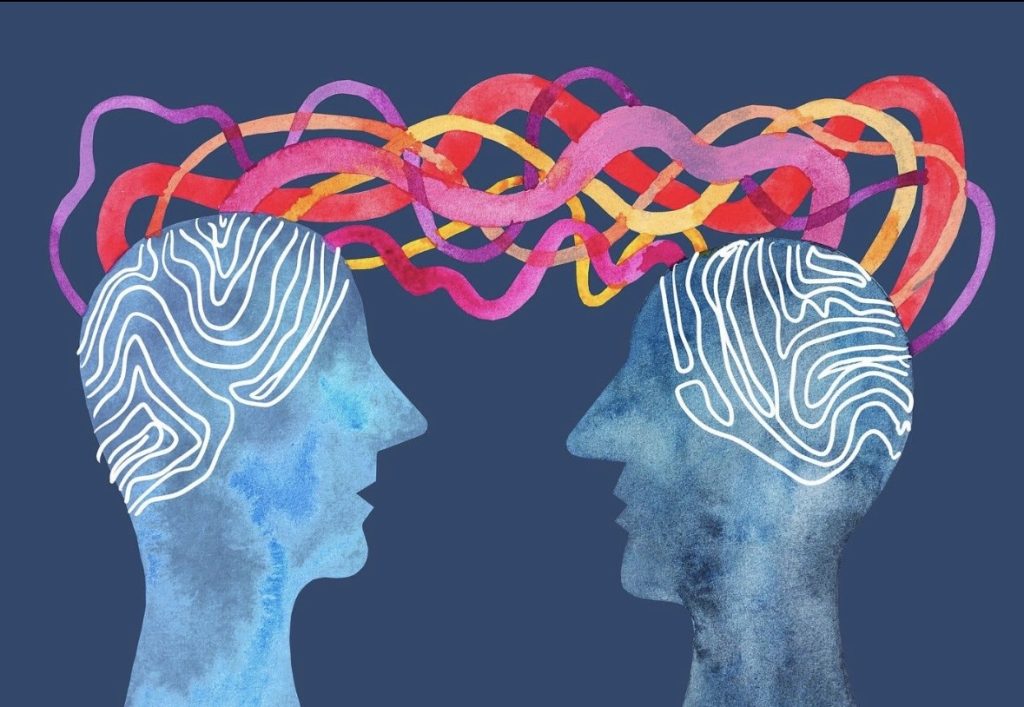
To worry that a secret group is orchestrating events devilishly together is often seen as an insinuation of irrational, unstable, or non-existent theories. Such people experience a sense of fear, caused by external pressures reverberating inward like sound waves. Conspiracy thinking is mostly driven by fear of what the mind imagines, leading individuals to search for signs, evidence, or counterfacts (Winter, 2014). Unexpected connections begin to build, and usually, when the unexpected happens (good or bad), a glimpse or slap of doubt finds its way in. Research supports that motivations for conspiracy beliefs appear as anxiety and feelings of powerlessness, such as struggling with racism or colonialism (Abalakina-Paap, Stephan, Craig, & Gregory, 1999). Some argue that conspiracy thinking stems from a distorted and oversimplified view of social and political worlds (Zonis & Joseph, 1994) and is correlated with lower levels of analytical thinking (Swami, Voracek, Stieger, Tran, & Furnham, 2014). People drawn to such theories share common motives characterized as epistemic (to understand), existential (to control and secure), and social (image of self) (Douglas et al, 2017).
What is often suggested is that conspiracy theories are barely scientific and mostly unreliable, mainly made by unstable minds. Feldman argues that their prima facie (first impression) is irrational (Feldman, 2011), reinforcing misconceptions of “craziness” and paranoia (Dentith, 2017). There is a connection, but paranoia and conspiracy do not necessarily go hand in hand; the similarity lies in patterns of thinking about the world where conspiracies play a disproportionate role in reality: “Paranoia is psychosis, a serious mental illness. Conspiracy thinking is not. In paranoia, delusions are almost always conspiracies centered on oneself. In conspiracy, there is no need for this be the case” (Zonis & Joseph 1994). If we address paranoia directly, it is linked to oppression and dominance. Therefore, it makes sense that people of lower social status due to ethnicity (Crocker, Luhtanen, Broadnax, & Blaine, 1999), income, or political loss are more likely to believe in conspiracy theories (Uscinski & Parent, 2014).
The Science of It
Conspiracy theories should be treated like any other theory, based on evidential merit. They are often dismissed because of quick assumptions attached to the term. Pigden argues that trusting historical and media coverage already implies real conspiracies, revolving around selected information, missing reports, manipulated headlines, and secret evidence. Whether we believe these sources are misinformative or not, we subscribe to a conspiracy ourselves (C. R. Pigden, in press). Any theory requires evidence to be accepted; however, conspiracy theories often rely on errant (unreliable or simply unexpected) data, making them unfalsifiable (Dentith, 2017). Roberts insightfully explains that labelling theories as unbelievable is paradoxical: “it is a term applied to any fact, analysis, or truth that is politically, ideologically, or emotionally unacceptable.” This helps explain why logically minded people tend to deny conspiracies. For a conspiracy to be exposed, intentional or accidental leaks must occur, yet people often politely ignore evidence for the sake of wealth, careers, lives, or loved ones, shielding themselves with passivity. Others rely on intuition even though they possess no information (Bowes et al., 2023).
A conspiracy is difficult to prove because it is supposed to be hidden and confined. Proving that a certain plot is being conspired is not the problem (Keeley 1999), because if there truly were a conspiracy, it would be normal to suspect misinformation as a cover-up: “people who try to debunk conspiracy theories may, themselves, be part of the conspiracy” (Lewandowsky et al., 2015). People remain skeptical of facts even when evidence exists and often believe claims that lack evidence. Some tend to judge and minimize such theorists. If the information we receive is diffused by people in high places who hold the most influence over our opinions, then the probability of them conspiring against us is as great as the probability of a conspiracy being fabricated.
Last but not Least
Simply put, conspiracy theorists from different backgrounds, cultures, ethnicities, and principles often unite over shared “enemies”. Eastern movements were viewed as a form of resistance against colonialism. Colonial powers historically focused on land and resources to gain economic, political, and cultural dominance. (Goodrick-Clarke, 2002)
Conspiracies are highly mocked, rejected, and associated with irrationality and lower social class, because history has been written by the “superior” and virtual winners of a conspired game: capitalism. Stories about chemtrails, vaccines (Dorthe, 2025), food fluoridation (Giry, 2023), and many “desires” and “duties” have circulated through societies to keep populations in line. For further information, refer to Saltarelli, who discussed multiple conspiracies that later proved true. (Saltarelli, 2015).
References
Saltarelli, K. (2015, June 8). 11 unbelievable conspiracy theories that were actually true. HowStuffWorks. https://history.howstuffworks.com/history-vs-myth/11-unbelievable-conspiracy-theories-that-were-actually-true.htm
Dentith, M. R. X. (2017). Conspiracy theories on the basis of the evidence. Synthese, 196(6), 2243–2261. https://doi.org/10.1007/s11229-017-1532-7
Zonis, M., & Joseph, C. M. (1994). Conspiracy thinking in the Middle East. Political Psychology, 15(3), 443- 459. https://doi.org/10.2307/3791566
Roberts, P. C. (2011, July 4). Conspiracies. Global Research (Centre for Research on Globalization).
Bowes, S. M., Costello, T. H., & Tasimi, A. (2023). The conspiratorial mind: A meta-analytic review of motivational and personological correlates. Psychological Bulletin, 149(5–6), 259–293. https://doi.org/10.1037/bul0000392
Douglas, K. M., Sutton, R. M., & Cichocka, A. (2017). The Psychology of Conspiracy Theories. Current Directions in Psychological Science, 26(6), 538–542. https://doi.org/10.1177/0963721417718261
Dorthe, G. (2025). Conspiracy theories as engines of connection for enriched public debates on Emerging Technologies. Communications Earth & Environment, 6(1). https://doi.org/10.1038/s43247-025-02581-x
Aaron Winter (2014), ‘My Enemies Must Be Friends: The American Extreme Right, Conspiracy Theory, Islam and the Middle East’, Conspiracy Theories in the Middle East and the United States, eds, M. Reinkowski and M. Butter, Berlin: de Gruyter. pp. 35-58.
Giry, J. (2023). Panic(s) in Our Plates: Contemporary Legends and Conspiracy Theories on Food. Contemporary Legend, 1(2023). https://doi.org/10.4324/9781003330769-20
Feldman, Susan (2011), “Counterfact Conspiracy Theories”, International Journal of Applied Philosophy, 25, 1, pp. 15-24, issn: 0738-098X.
Pigden, Charles R. (in press), “Conspiracy Theories and the Conventional Wisdom Revisited”, in Secrets and Conspiracies, ed. by Olli Loukola, Rodopi, in press.
— (2016),“AreConspiracyTheoristsEpistemicallyVicious?”,inBlackwellCompan- ion to Applied Philosophy, ed. by David Coady, Kimberley Brownlee, and Kasper Lipper-Rasmussen, Wiley-Blackwell, chap. 9, pp. 120-132, isbn: 978-1118869130, doi: 10.1002/9781118869109.ch9.
Keeley, Brian L. (1999), “Of Conspiracy Theories”, The Journal of Philosophy, 96, 3, pp. 109-126. — (2007), “God as the Ultimate Conspiracy Theorist”, Episteme, 4, 2, pp. 135-49.
Abalakina-Paap, M., Stephan, W. G., Craig, T., & Gregory, L. (1999). Beliefs in conspiracies. Political Psychology, 20, 637–647.
Swami, V., Voracek, M., Stieger, S., Tran, U. S., & Furnham, A. (2014). Analytic thinking reduces belief in conspiracy theories. Cognition, 133, 572–585.
Uscinski, J. E., & Parent, J. M. (2014). American conspiracy theories. New York, NY: Oxford University Press.
Lewandowsky, S., Cook, J., Oberauer, K., Brophy, S., Lloyd, E. A., & Marriott, M. (2015). Recurrent fury: Conspiratorial discourse in the blogosphere triggered by research on the role of conspiracist ideation in climate denial. Journal of Social and Political Psychology, 3, 142–178.
Goodrick-Clarke, N. (2002). Black sun: Aryan cults, esoteric Nazism, and the politics of identity. New York, NY: New York University Press.
Edited and copyedited under the supervision of Fatima Nazar